Diversity: One Employee's Story About Disability
On July 26, 1990, President George H.W. Bush signed into law the Americans with Disabilities Act (ADA), which prohibits discrimination against individuals with disabilities in all areas of public life, including jobs, schools, transportation and all public and private places that are open to the general public. The law ensures that people with disabilities have the same rights and opportunities as everyone else.
As we approach the 31st anniversary of the ADA, we want to raise awareness for the individuals you work alongside and serve who may experience disabilities.
Sixty-one million adults live with a disability in the United States. That means that 26% (one in four) of adults in our country have some type of disability.
You may think of a disability as someone experiencing visible physical limitations, but there are many types of disabilities. They can affect your vision, thinking, memory, learning, communication, hearing, mental health and social relationships. Individuals with the same disability can be affected differently and have unique needs. Additionally, many disabilities cannot be seen or are hidden.
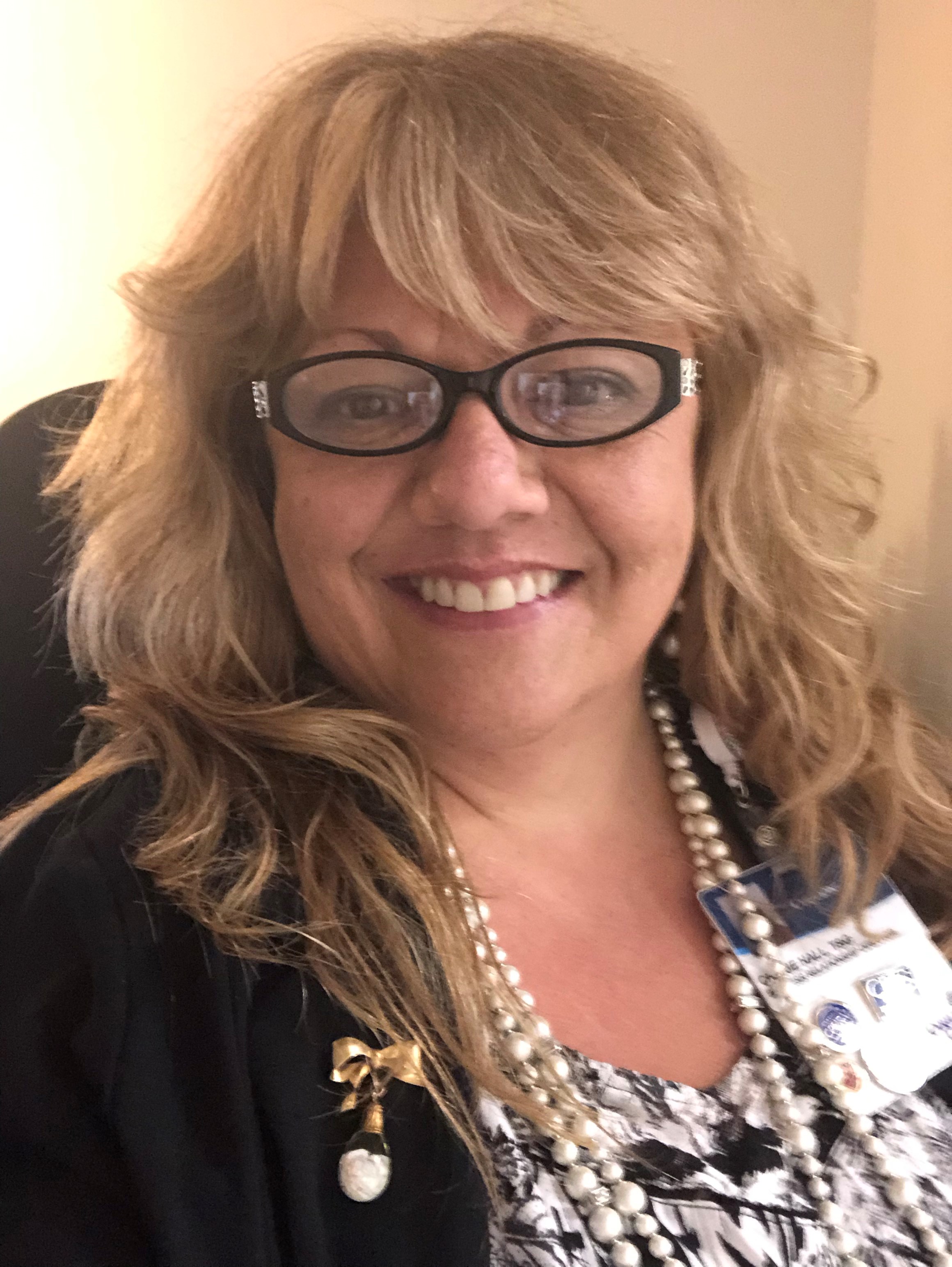
Cherie Hall, a business relationship director with Technology Services Group, experienced this when she was diagnosed with Multiple Sclerosis (MS) in 2013—just a couple years after she started working at Carilion.
MS is a disease of the brain and central nervous system that causes the immune system to attack nerve fibers’ protective covering, which creates lesions that break down communication between the brain and the rest of the body. While there are a few common symptoms, the disease is individual to sufferers, depending on the location of the lesions. Some symptoms include pain, chronic fatigue, weakness, memory problems, difficulty walking, tremors, numbness, bladder/bowel dysfunction and anxiety.
Ask for Help
Cherie learned that many sufferers choose not to disclose their illness to their employers for fear of being passed over for promotions or even losing their jobs. She debated whether she should disclose her diagnosis as well.
“Based on my experience with Carilion at that time, I felt confident I would be supported in my desire to remain a productive member of the Carilion family,” said Cherie. “It was absolutely the right decision!”
Cherie’s manager asked what she needed and guided her to work with our disability insurer, The Standard, who did an ergonomic review of her workspace. She was then provided a new chair and desk lift, and granted intermittent FMLA for days when she experienced an MS flare. As soon as it was feasible, Cherie’s position was transitioned to remote.
Since then, Cherie has advanced in her career with Carilion—despite being diagnosed with a brain tumor and on the autism spectrum. In her role, she works with vice presidents and other senior leaders in select areas to strategically plan and implement information technology solutions to meet organizational goals.
Cherie says, “the Carilion leaders I have been blessed to work with have been nothing but supportive in my desire to continue to work.”
Employees with disabilities can request necessary accommodations through their manager, Human Resources or Employee Health. Requests are then referred to a team that reviews the requests and makes recommendations for accommodation, while keeping the employee’s medical information confidential.
“Having a disability doesn’t mean that we aren’t valuable or that we can’t remain productive,” says Cherie. “We all have something to contribute to Carilion’s mission of improving the health of our communities. Don’t be afraid to ask for help.”
Learn More
- Virginia Tech Carilion School of Medicine Diversity Website
- What is the Americans with Disabilities Act?
- Centers for Disease Control and Prevention
- Americans with Disabilities Act of 1990 (Wikipedia)
If you have questions, contact the Office of Diversity, Equity and Inclusion:
- Dr. NL Bishop - nlbishop@carilionclinic.org
- Briana Apgar - blapgar@carilionclinic.org


Our Office of Diversity, Equity and Inclusion focuses on health equity, addresses social factors that influence health and works internally with Human Resources to develop diversity, equity and inclusion strategies.
Through our diversity efforts and commitment to fostering an environment where everyone feels welcomed and supported, we highlight different topics.
