Our Human Factors Team Uses Science to Solve Problems
Our seven-person Human Factors team is often asked to help with challenging problems in the systems of health care delivery. Whether it’s the design of our clinical equipment, the physical environments where we work or the actual tasks that our caregivers do each day, the human factors team uses principles from psychology, anthropometry, statistics and engineering to understand what people are capable of and what limitations exist. Then they help design equipment, environments and processes that are safe and efficient for our staff, patients and visitors.
In short, they take established scientific principles on human performance and apply them to the complex work of health care. The team collaborates with staff from the Virginia Tech School of Medicine, Fralin Biomedical Research Institute and the Carilion Center for Simulation.
How the Team Works
Human Factors uses a scientific approach to understand how work is actually being performed. The team is a translational human factors team, which means they work on fixing patient-centered issues, and their solutions are applied directly to patient care in real time.
The best opportunity for the Human Factors team to help is in the design phase of a new workflow, device implementation or other system change. This allows them the opportunity to study how users will react to a change, identify potential issues with workflow and predict where errors might happen. What does this look like in practice? On any given day at work, one of our Human Factors scientists might:
1: Observe – The team talks with employees about their daily work and observes it in real time to understand the root causes of the challenges that needs solving.
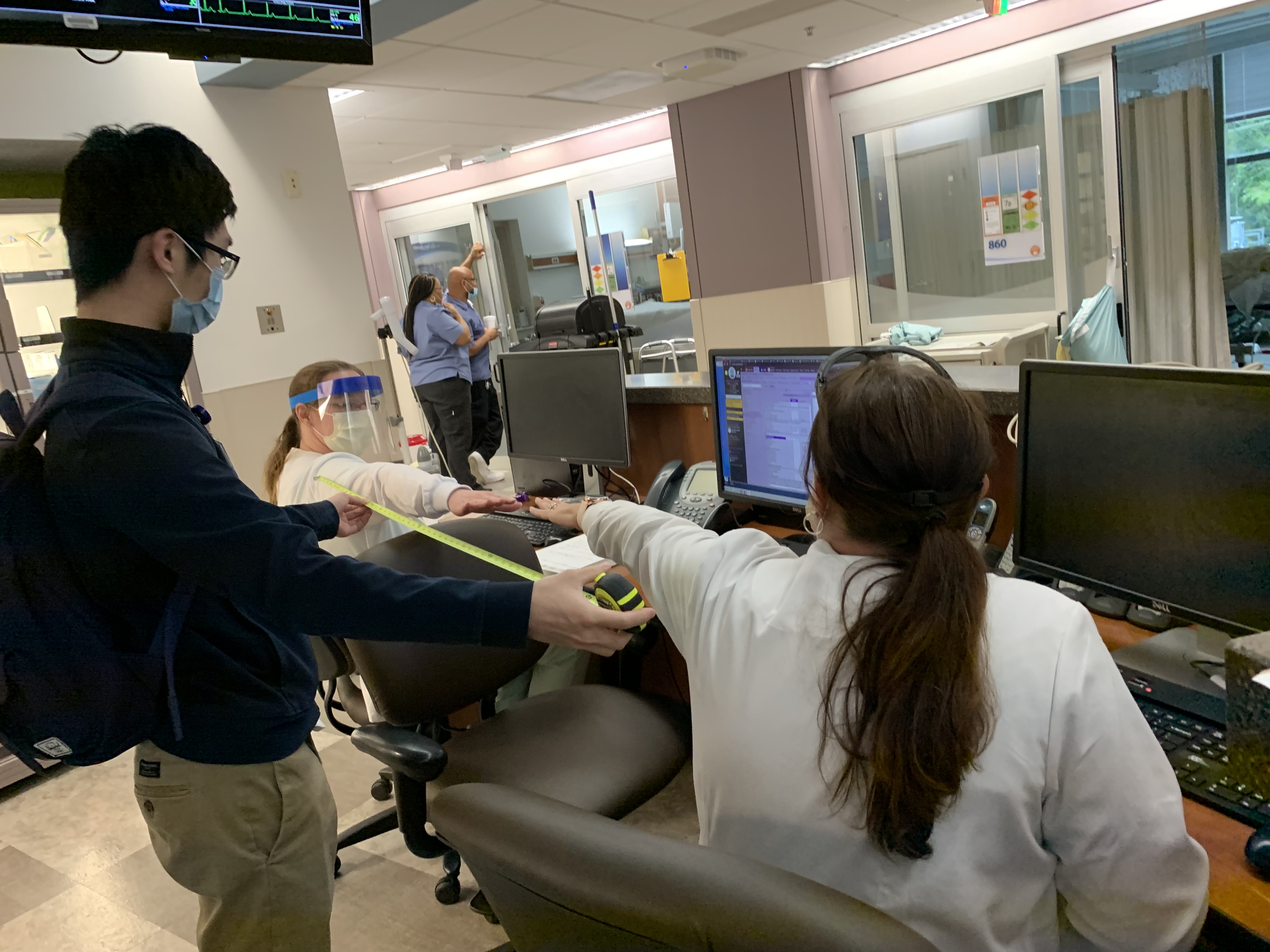
2: Experiment – They conduct a variety of experiments to break apart the issue and fix underlying problems, often at our Sim Center.
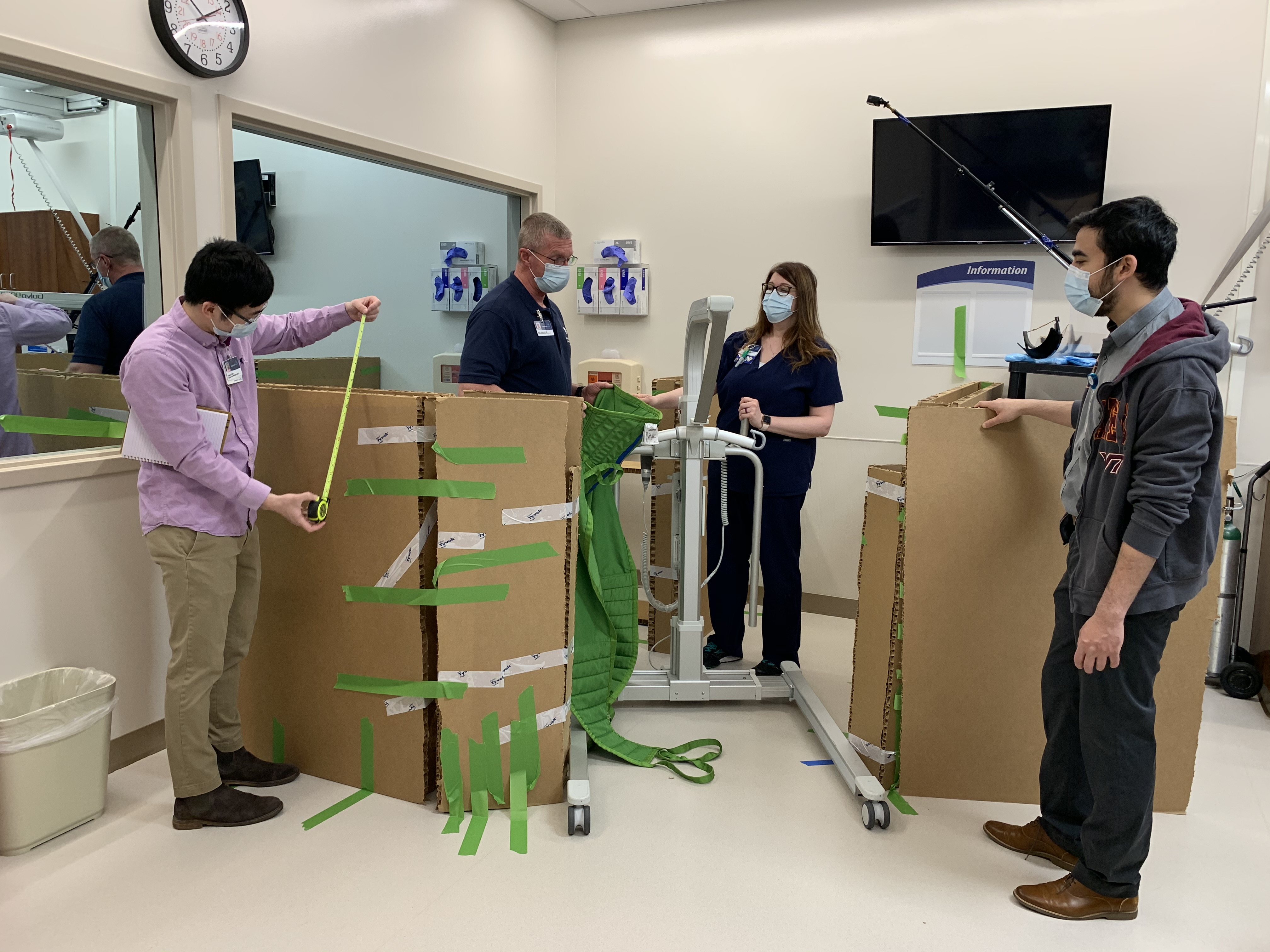
3: Collaborate with Carilion partners – They work with the Clinical Advancement and Patient Safety and Innovation teams, as well as leadership and staff of a variety of specialties, to find solutions.
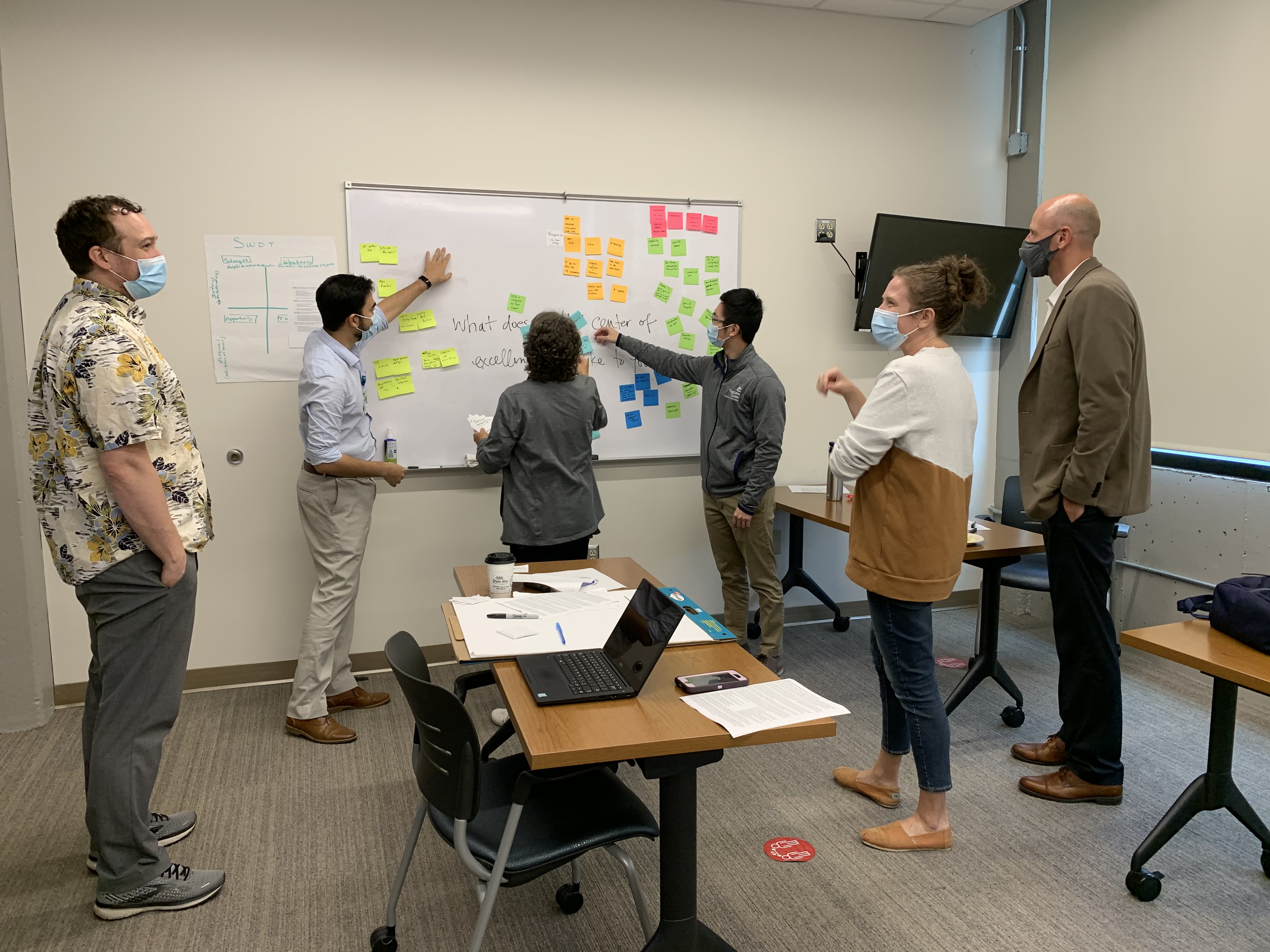
4: Collaborate with external partners – The team’s work has been supported by National Institutes of Health (NIH), Occupational Safety and Health Administration (OSHA) and Centers for Disease Control and Prevention.
The best opportunity for the Human Factors team to help is in the design phase of a new workflow, device implementation or other system change. This is when they can study how users will react to a change, identify potential issues with workflow and predict where errors might happen.
Some of the Team’s Recent Projects
- An insulin calculator developed to provide guidance for ordering and administering an individualized dosage based on a patient’s sensitivity, weight and meal frequency: Human Factors asked providers and nurses to test the new calculator in Epic, then measured their performance and analyzed survey data. They used the feedback gathered to design a calculator that is safe and easy for caregivers to use.
- A more comfortable face shield for frontline caregivers caring for our COVID-19 patients: Human Factors collaborated with the COVID innovations team and frontline staff to help design a comfortable, easy-to-wear face shield that reduces complications like fogging, headaches, and overheating—while still providing the necessary protection.
- A sepsis alert system sensitive enough to detect changes but also avoid false alarms is currently in progress: Human Factors conducted focus groups and individual interviews with nurses and providers to understand their needs and frustrations with identifying and treating sepsis. The team plans to work with the sepsis team to identify future opportunities for collaboration.
Contact the team to set up a preliminary discussion about how they can help by email at HumanFactors@carilionclinic.org.


What is Human Factors? It’s the scientific discipline dedicated to understanding how humans can work efficiently and mistake-free.
What does our Human Factors team do? They collaborate with hospital staff, use different methods to identify inefficient or mistake-prone tasks and develop system-solutions.
Did you know? We have one of the largest translational human factors teams of any health care system in the United States.
