Carilion History: Beginning to Expand (1920–1940)
During the 1920s, Roanoke’s population topped 50,000, and a flu epidemic had underscored the need for improved medical services.
But other than endowments, public contributions for 1920 totaled just $20, plus towels from the Roanoke Needlework Guild.
Sixty percent of the hospital’s work was charity or semi-charity, at a cost of more than $6,000 annually. In 1920, 6,354 days of treatment was provided to 563 patients at a cost of $3.97 per day.
The board of trustees launched a major building fund campaign, with a goal of $150,000. Board members reminded citizens that the hospital had not cost the public anything and that no other community had spent so small an amount for the relief of their sick and wounded.
In 1922, construction of what became known as the South Wing began.
It was 35 feet from the hospital’s original wooden structure and made room for 85 more patients. It was built from fireproof materials, with one passenger elevator and two dumbwaiters for the dietary department.
When trustees realized that the old wooden hospital could not be rehabilitated and was a fire hazard to the new building, it was demolished and construction began on the Flickwir Memorial Unit, named for Charlotte Flickwir, the deceased wife of David Flickwir, often considered the hospital’s greatest benefactor.
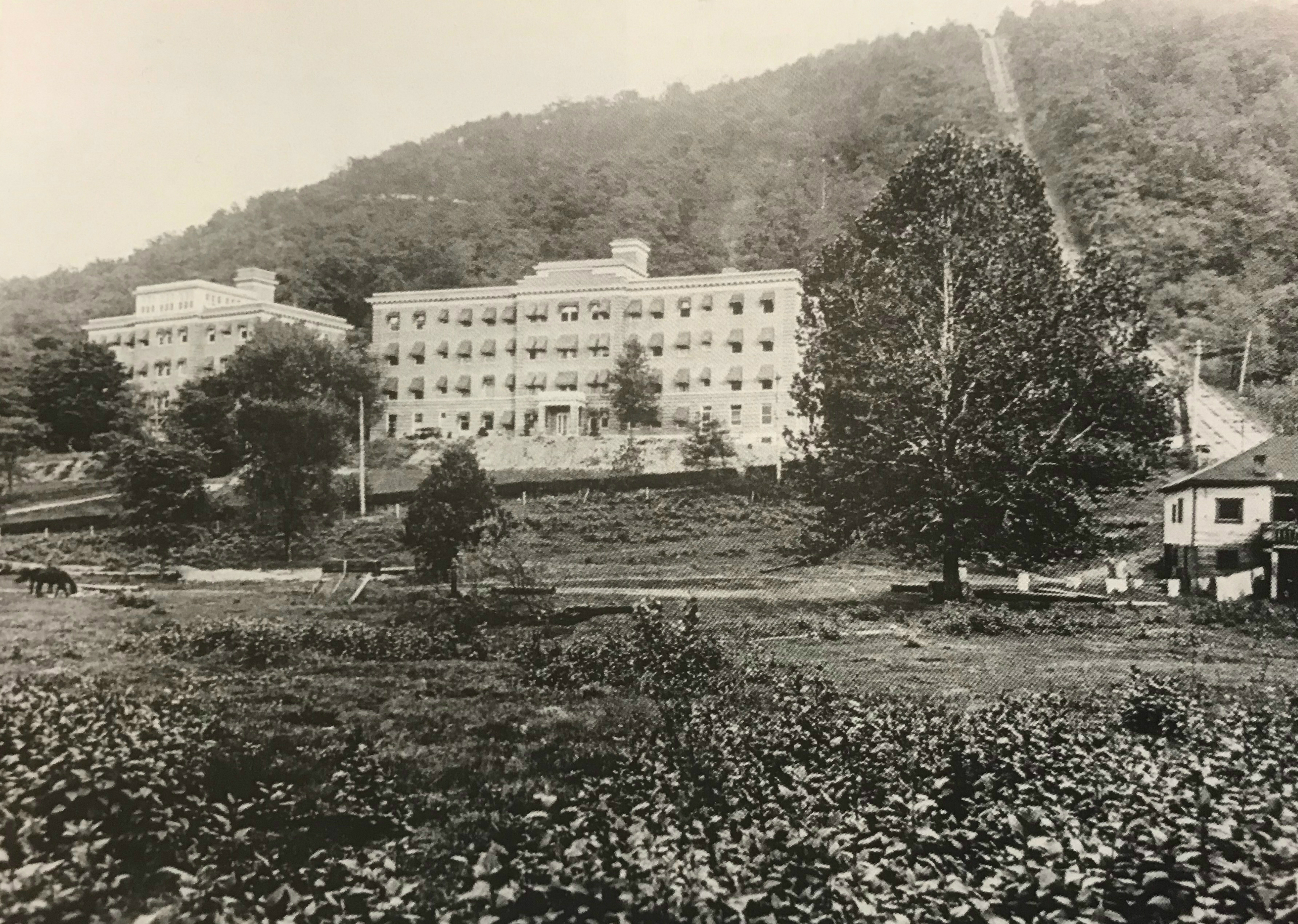
The Roanoke Hospital, 1924, during construction of the Flickwir Memorial Unit (check out the horse grazing in the field in front of the hospital!); the small building on the right is the Mill Mountain Incline
Flickwir paid for the construction of the new building and innovative technology like radiators, hot and cold water in all rooms and a fully-equipped laundry. He also donated $10,000 to the South Wing to make sure it opened in 1922, paid to expand the nurses’ residence and donated money for the perpetual operation and maintenance of the Flickwir Memorial Unit.
The 1924 annual budget for staff and help for the new hospital was $28,440.
There were 1,111 admissions to the hospital that year, with an average stay between eight and 14 days.
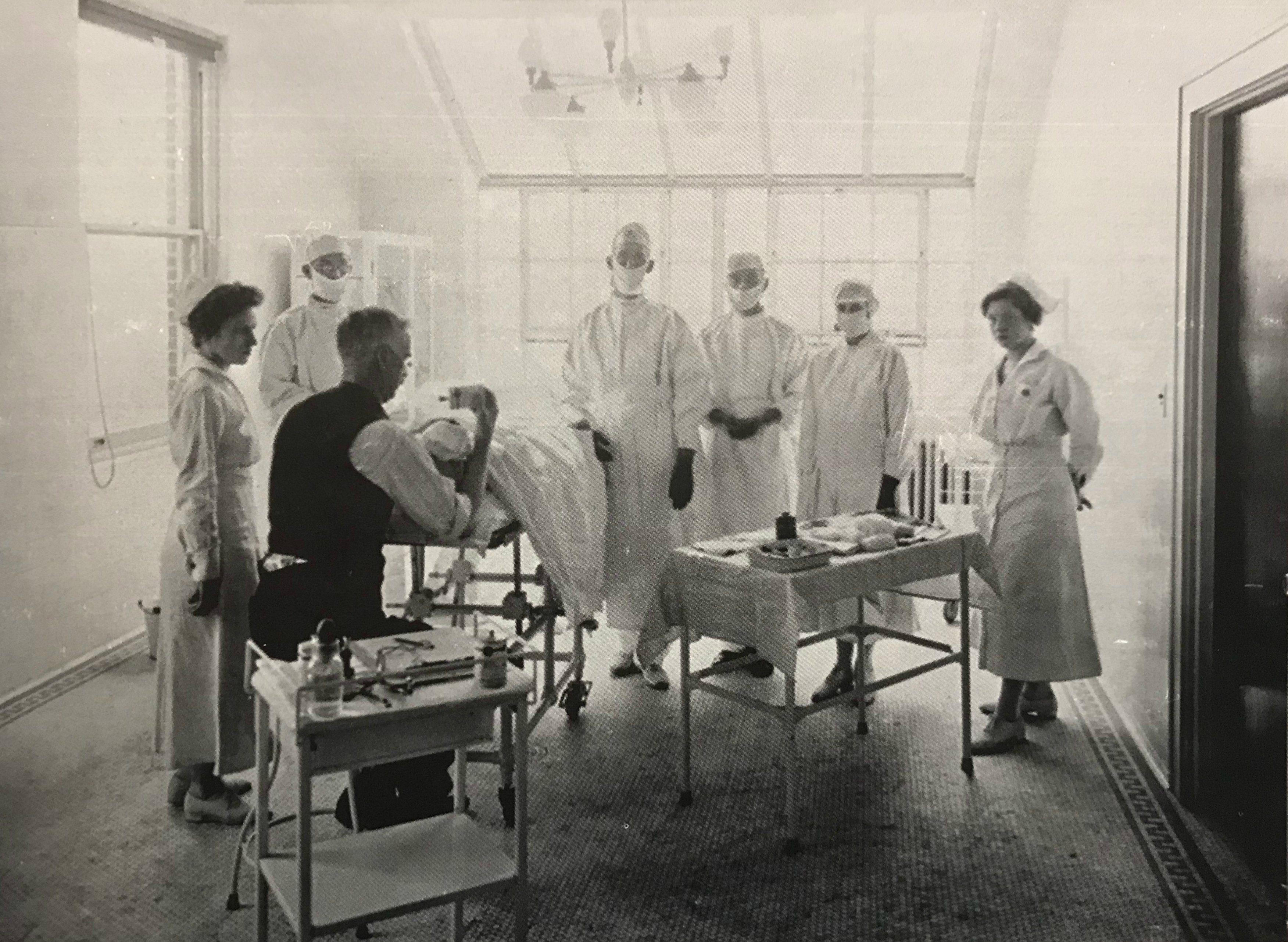
The first operation is performed in the new Roanoke Hospital operating room on Feb. 3, 1924; it was one of six that day


The Outpatient Department
Unique to the Roanoke Hospital Association was its outpatient department, called the Free Clinic. It served as a treatment center for the city’s residents who were not sick enough for hospital admission or those who could easily be treated and sent home for convalescing supervised by visiting nurses.
The first year, 1924, there were 426 patients treated. Patients could be hospitalized for free as a result of clinic visits.
In 1925, 31 doctors provided free services at the clinic and most specialties were represented. Expenses were covered by contributions from Roanoke’s Community Fund and hospital revenues.
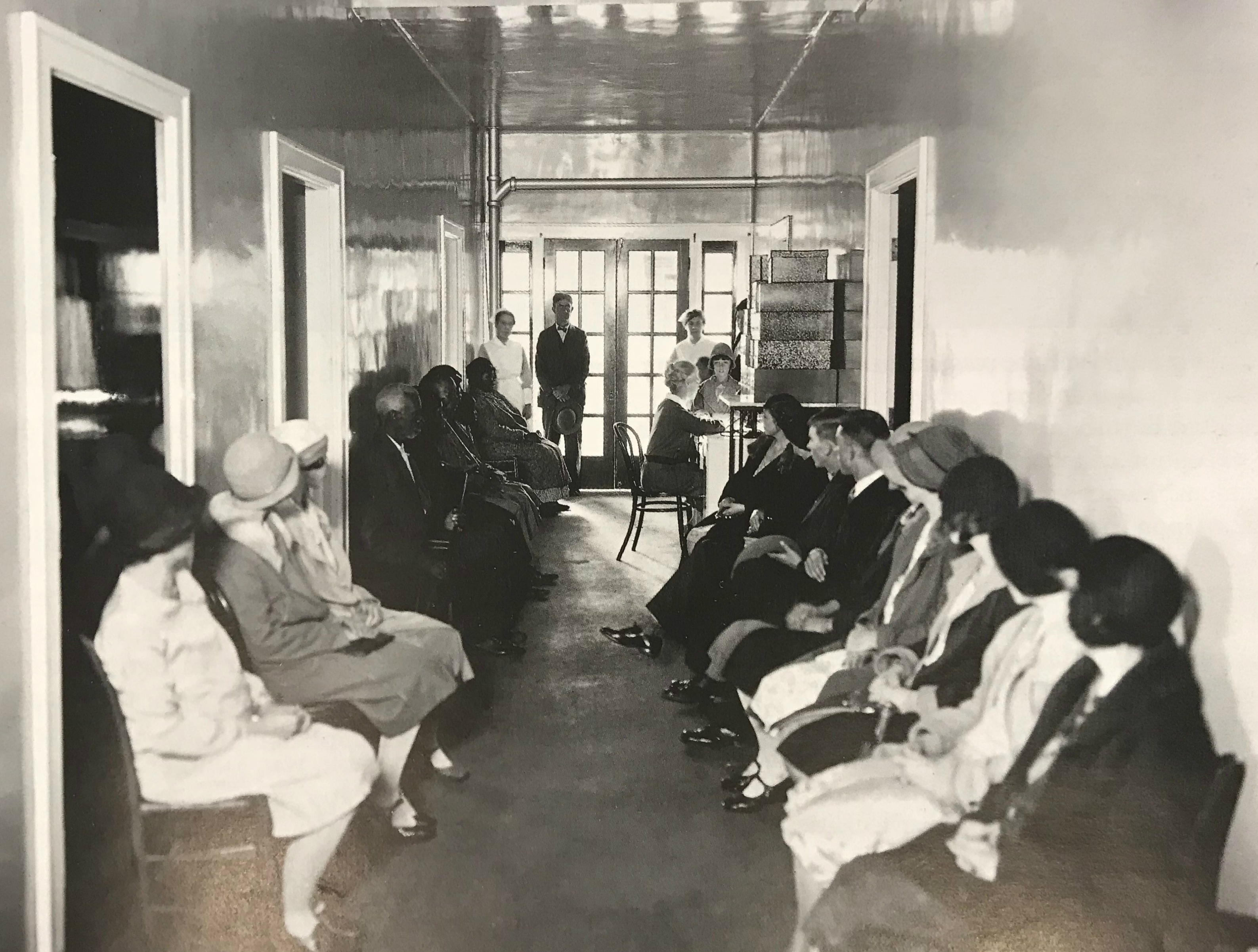
The outpatient department waiting area, circa 1930
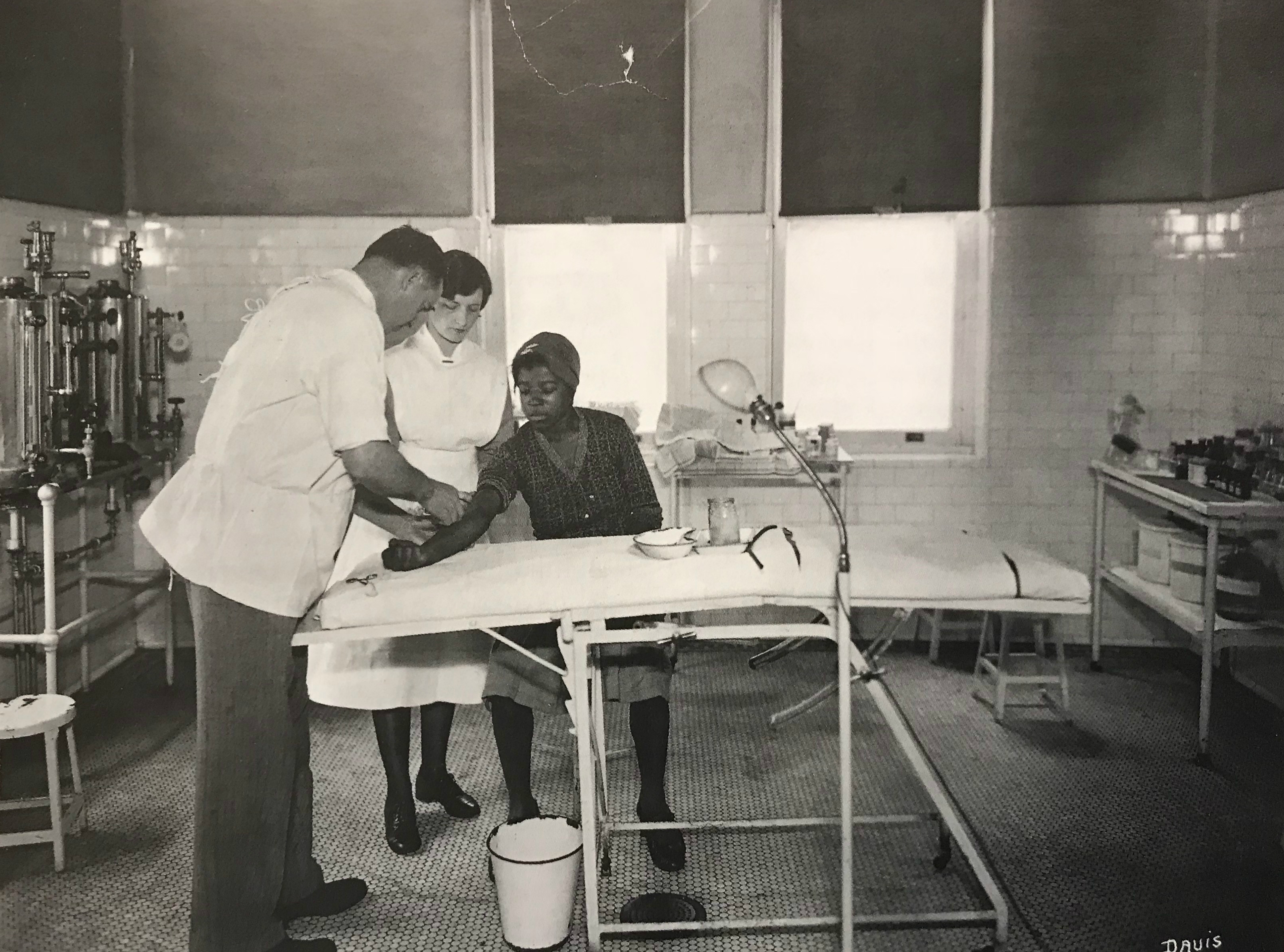
A patient receives medical care in the Free Clinic, circa 1930
By 1930, the clinic was seeing more than 600 patients each month, and the Junior League of Roanoke, a young women’s benevolent civic organization, agreed to adopt the Free Clinic.
Additional rooms were built in an annex connecting the Flickwir Memorial Unit and the South Wing. To raise money, the women’s group held fashion shows, dances, children’s plays, assisted at openings of department stores, automobile shows and other events.
Most notable was a Junior League-sponsored dance in 1931, featuring Guy Lombardo’s Big Band at the area’s favorite amusement park, Lakeside, raising $1,900.
Twenty Junior League volunteers provided clerical and chaperoning assistance to the medical professionals in the clinic. The League also provided transport for clinic patients to and from the facility, where they could be seen by more than 35 doctors and 20 dentists.
The Great Depression
During this time, only the Roanoke Hospital Association and Burrell Memorial were receiving patients regardless of their ability to pay.
The City of Roanoke contributed $6,500 in 1929 to Roanoke Hospital and the local Community Fund gave $8,000. Prescriptions were paid for by the Family Welfare Society. Donations were received from the local Parent-Teacher Association, Norfolk & Western and the Red Cross.
But because collecting overdue accounts from paying patients was difficult during the hard economic times, and 45 percent of the hospital's work was for free cases, there was less than $300 in the treasury by January 1933.
Expenses had to be curtailed, staff and salary received payroll cuts and the spring class of student nurses was canceled.
In spite of the financial stress, patients were still treated.
A mainstay of volunteers was crucial during this time. The Junior League continued to pay for treatment and x-rays for clinic patients. The Roanoke Needlework Guild provided towels, pillow cases and baby clothes. The Jewish Sisterhood of Temple Emanuel met every week to make hospital supplies. The Mill Mountain Garden Club provided Christmas trees for the hospital and Christmas gift for patients.
By 1936, the economy had begun to recover and large-scale repairs and equipment replacement were managed by 1938.
In 1938, admissions to the Roanoke Hospital totaled 2,565.
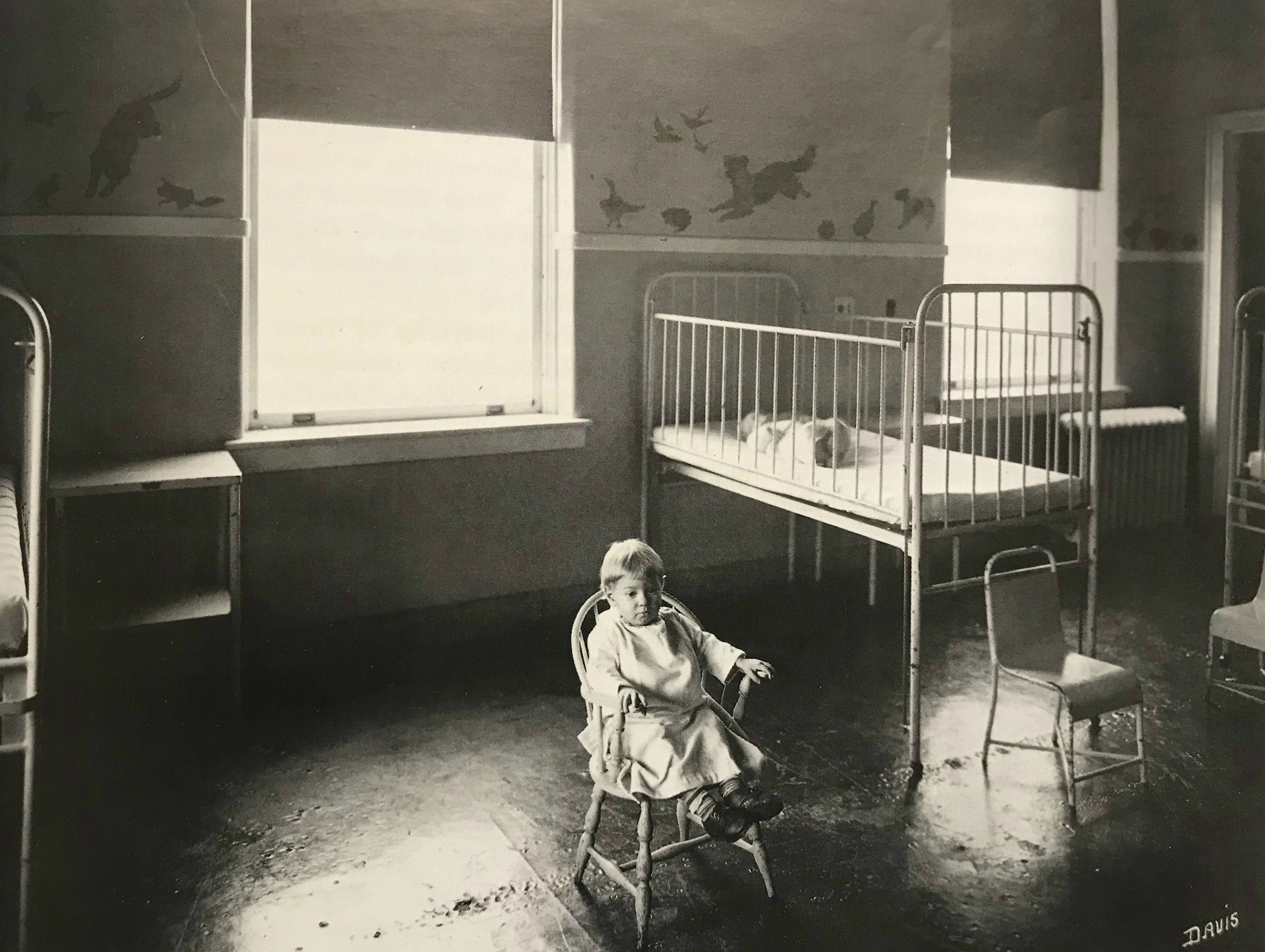
The children's ward, circa late 1920s-early 1930s
The Roanoke Hospital Association ended the decade with nearly $400,000 in assets but had never recorded a profit. While not a financial success, it had improved the health of thousands of Roanokers in a period when physical health was as hard to obtain as economic health.
Stay tuned for more history!


