Carilion History: How It All Began
Carilion is not an overnight success story. Our roots run deep in the region, touching generations of families in the Roanoke and New River Valleys and beyond.
If the system is best represented as a tree, then Roanoke Hospital Association (RHA) is the trunk of that tree.
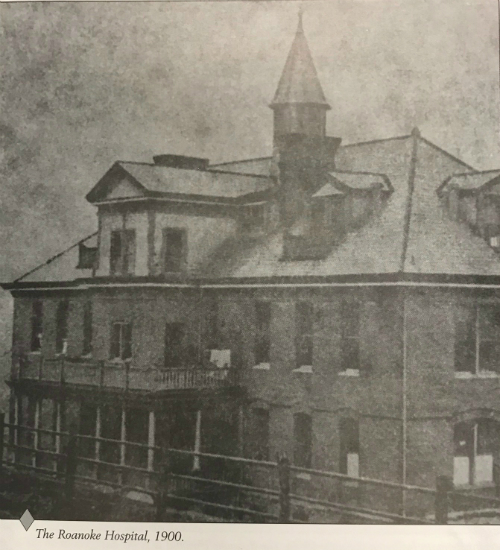
RHA was founded in the late 1800s to help raise funds for building Roanoke’s first hospital. As a result of RHA’s efforts, Roanoke Hospital—which is today CRMH—was chartered in 1899 and opened in 1900.
 Roanoke Needs a Hospital
In 1881, the town fathers of what was then known as Big Lick persuaded the Shenandoah Valley Railroad and the Norfolk & Western (N&W) Railway to connect rail lines in their community.
Injuries to railroad workers were frequently severe and infections were common, but no emergency care facility existed in Roanoke; local physicians referred seriously ill cases to Johns Hopkins in Baltimore or the Medical College of Virginia in Richmond.
In 1892, several energetic, dedicated and persevering women established the first charitable hospital in Roanoke as part of the interdenominational charitable sisterhood of King’s Daughters. They outfitted a residence with six beds with rates for those who could pay of $1.50 for the first day and $1.00 for each following day.
But the hospital was too small and its equipment inadequate to serve the needs of the growing population and the rough-and-tumble railroad town.
In 1888, six local businessmen secured a charter for The RHA, and a subscription drive was undertaken to raise $25,000 to establish a charitable (not for profit) medical institution.
At the time, people generally disliked hospitals and raising money proved difficult. Eventually, the group managed to raise just $11,000. They joined forces with the King’s Daughters, who had also received some contributions for the hospital effort.
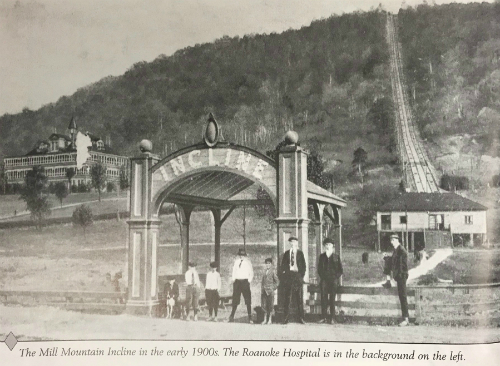
In 1893, the Roanoke Gas & Water Company gave the RHA three acres near Crystal Spring reservoir on the west side of Mill Mountain. The mountain air and quiet restful countryside made this location perfect for curing illnesses of the day.
The Journey to Opening
Though construction began, it soon came to a standstill with the financial depression of the last decade of the 19th century.
But there was still a need for a place to treat residents.
The Roanoke Gas & Water Company agreed that if N&W would pay all the bills and take title of the property, the Gas & Water Company would complete the building located at Mill Mountain. In turn, N&W agreed to lease the building to RHA for $1 per year. N&W also agreed to contribute $500 toward the first-year operating expenses; for that contribution, the hospital agreed to reserve space for railroad employees free of charge, and N&W would get a representative on the board of directors.
The Roanoke Hospital was completed at a cost of almost $10,000. Facing the mountainside rather than the town, the wood structure had three floors and a basement.
Local churches donated funds to furnish private rooms at a cost of $65 each. Patients would be charged $1 per day/ $5 per week for ward beds, and $2 per day/$10 per week for private rooms. Annual rates of $150 and $300 were set.
Visiting hours were limited to 3-5 p.m. on Wednesdays and Saturdays and medical supplies such as bandages had to be provided by the patient. Admission of non-city residents as patients had to be approved by a special committee.
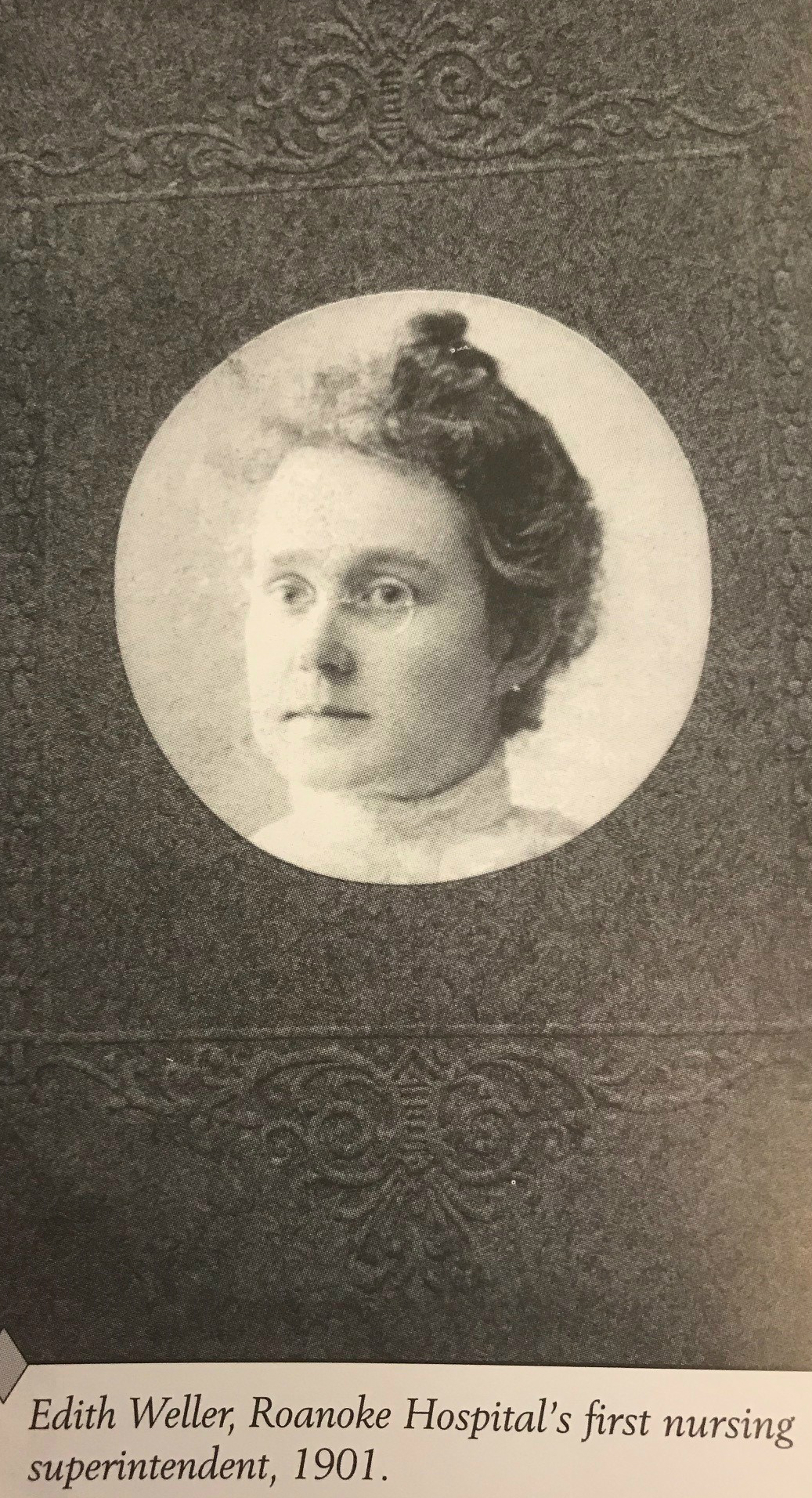
Letters were written to medical schools requesting applicants for a resident physician who would be furnished with room, board and laundry. He was paid by local physicians and attended the medical and surgical needs of patients. In all other aspects, the head nurse (superintendent) was in charge of the hospital.
The superintendent was paid $50 a month and purchasing food supplies for patients with an allowance of $10 per week.
The Doors Open
The Roanoke Hospital opened on June 30, 1900. The city was pleased with its new “monument to the energy, public spirit and generosity of Roanoke’s people.”
A glowing report in the Roanoke Times carried on about the hospital’s splendid equipment and building that was spotlessly neat in every detail. Citizens admired the brick construction, located on the “prettiest spot that could have been selected.”
Because the new hospital was intended to benefit all citizens of Roanoke, regardless of their ability to pay, expenses were financed through annual subscriptions. Subscriptions were sold to the city, the railroad, churches and civic organizations, and they endowed beds or a room in the hospital for the benefit of members of each group.
During its first month, the hospital admitted 24 patients. Patient counts within the first few months inspired leaders to create additional capacity, and three more beds were added. Later that year, construction began on an additional floor to accommodate six more beds.
By the following year, staff included a head nurse, full graduate nurse, night nurse, five student nurses and five assistants. At the end of that second year, the hospital had treated 182 patients.
Stay tuned to Inside Carilion for more history about The Roanoke Hospital and Carilion through the years!


